
Editor’s note: Ahead of Canada Day weekend, we are following up on our series that covered the greatest hockey year in every U.S. state’s history last November. The choices for the sport’s most memorable year in every Canadian province are as follows.
Alberta: 1988
The Stanley Cup and Memorial Cup have twice come to Alberta in one spring. In 1987 and 1988, the Edmonton Oilers and the Medicine Hat Tigers nabbed the ultimate prize in their respective ranks.
To distinguish 1988, Tigers hometown hero Trevor Linden had a grand follow-up at the NHL Draft. The Medicine Hat native went second overall to the Vancouver Canucks. Following American prodigy Mike Modano, whom Minnesota chose at No. 1, Linden was the highest-picked Canadian that year.
Granted, this was also the year the Oilers dealt Wayne Gretzky to Los Angeles. But at least the Great One ended his Alberta tenure in style. His second-period power-play goal in the Cup-clinching game proved the winner, and he nabbed his second Conn Smythe Trophy.
British Columbia: 2010
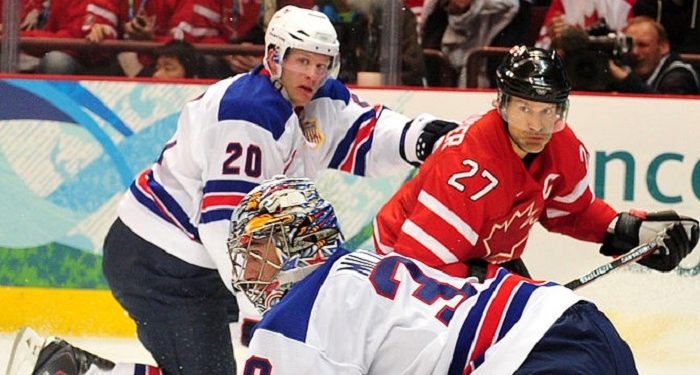
Entering the Vancouver Olympics, no Canadian hockey team had ever medaled on home ice. At the 1988 Games in Calgary, the women’s tournament was 10 years away and the men came up empty.
Seeking its third straight women’s championship, Canada cruised through the round robin. With 18-0, 10-1 and 13-1 romps in Group A, it secured the top seed in the medal round. A subsequent 5-0 semifinal win over Finland and 2-0 edging of the rival United States delivered the crown before a packed Canada Hockey Place.
The next night, the host country crowd reconvened to watch the men suppress Slovakia, 3-2, in their semifinal. Yet another border battle was set for gold, and the Canadians prevailed via Sidney Crosby’s overtime goal.
Among the male gold medalists, Scott Niedermayer, Brent Seabrook and Shea Weber all represented B.C. on the blue line. The winning goaltender, Roberto Luongo, held the same position with the Canucks at the time.
Four months later, Vancouver native Ryan Johansen went fourth overall in the NHL Draft, making him 2010’s top pick from outside the Ontario League. Campbell River’s Brett Connolly of the Prince George Cougars went No. 6.
In between those international and continental headlines, the host Fort St. John Flyers won the Allan Cup as Canada’s senior-league national champions.
Manitoba: 2018
Winnipeg witnessed a hat trick of milestones this past spring. Depending on how you slice it, the city scored a hat trick and change.
On March 18, the University of Manitoba claimed the province’s first Canadian collegiate women’s national championship. The Bisons met tournament host Western University in Ontario, and rode Lauryn Keen’s power-play icebreaker late in the middle frame to a 2-0 triumph.
Back home, the MTS Centre’s NHL and AHL tenants were each building toward a playoff run. For the first time since the Manitoba Moose returned as the Winnipeg Jets’ live-in affiliate, both teams were postseason-bound.
Both would extend their runs to multiple rounds. The Moose knocked off the defending Calder Cup champion Grand Rapids Griffins before bowing to the Rockford IceHogs. Their parent club topped the Minnesota Wild for the Atlanta-turned-Winnipeg franchises’s first playoff series victory.
With a subsequent seven-game ousting of the Nashville Predators, the Jets reached their first NHL conference final. That goes for their current edition and the one that spent 17 years in Manitoba before moving to Arizona.

The Manitoba Moose joined their live-in parent Winnipeg Jets on multi-round playoff runs in 2018. (Photo by Amanda Statland/Pucks and Recreation)
New Brunswick: 1982
Moncton housed an AHL franchise under four identities for 22 uninterrupted seasons. The first team, the New Brunswick Hawks, capped a four-year tenure in 1982 with the province’s first Calder Cup title.
Two years after losing the final to Hershey, the Hawks bounced back and vanquished the Binghamton Whalers. They clinched the Cup at the Moncton Coliseum with a 4-2 victory in Game 5 on May 10.
That made two home-ice title-takers in one year at the Coliseum. The Monton Aigles Bleus had previously won the 1982 David Johnston University Cup as Canadian Interuniversity national champions.
To sweeten the narrative, the Blues overcame a 2-0 deficit with four unanswered third-period goals to vanquish Saskatchewan.
Newfoundland and Labrador: 2011
Within two months, the easternmost Canadian province savored two second-time blessings.
On April 16, the Clarenville Caribous delivered Newfoundland’s second Allan Cup in the tournament’s nearly century-old history. That triumph ended a 25-year gap between titles for any Labradorian team.
Later that spring, professional hockey returned after a six-year absence. The St. John’s Maple Leafs had moved to their parent club’s town after 14 years at Mile One Stadium. Now the new Jets were evicting the Manitoba Moose, but found them a new identity as the St. John’s IceCaps.
Ironically, as mentioned in the Manitoba slide, the Jets would bring their affiliate back to Winnipeg in 2015. But the IceCaps stuck for two seasons as a short-term Montreal Canadiens partner. Starting this year, St. John’s will have its first ECHL franchise in the Newfoundland Growlers.
Nova Scotia: 2013
May and June fulfilled a seeming destiny and completed long-awaited formalities in the 2012-13 season.
With the dynamic duo of Nathan MacKinnon and Jonathan Drouin, the Halifax Mooseheads were a heavy favorite for the Memorial Cup. In its first 94 years, the coveted major-junior national championship had never gone to a Nova Scotia club.
That changed when MacKinnon, a local favorite from Cole Harbour, completed his hat trick in the title game. His empty-net conversion put away a 6-4 win over high-end NHL Draft prospect Seth Jones and the Portland Winterhawks. With a tournament-best seven goals and 13 points, MacKinnon claimed MVP accolades.
Five weeks later, MacKinnon went first overall in the draft to the Colorado Avalanche. Drouin followed him as the No. 3 pick by Tampa Bay. As a bonus, Montreal made Halifax’s Zach Fucale 2013’s highest-picked netminder at No. 36.
MacKinnon immediately joined fellow Cole Harbour native Sidney Crosby in The Show, and had 24 points in 39 games by New Year’s Eve.
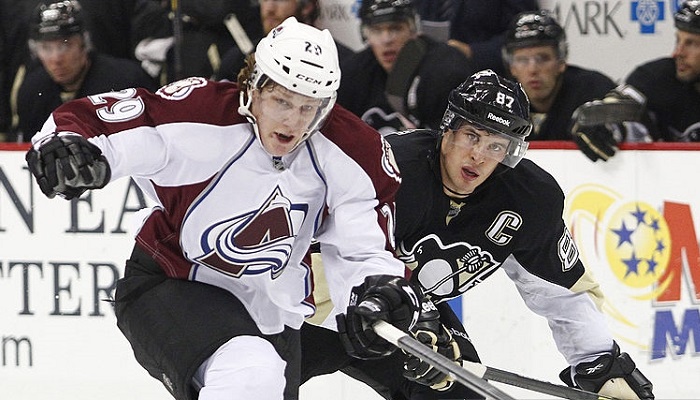
It was a proud moment for Nova Scotians when Nathan MacKinnon and Sidney Crosby first faced off in the NHL. Earlier in the year, Nathan MacKinnon had led his hometown Halifax Mooseheads to the Memorial Cup. (Photo by Justin K. Aller/Getty Images)
Ontario: 1967
Maple Leafs antagonists will frame this year in a cantankerous context as long as Toronto’s Stanley Cup drought persists. With that said, it was a great time in Ontario hockey by simple virtue of the province’s then-only NHL team winning the title. Winning it against Montreal in Canada’s centennial year as an independent nation surely emboldened the flavor.
There was, however, much more to 1967. It was one of the few times the Memorial Cup has had an all-Ontario final. The Toronto Marlboros beat tournament host Port Arthur in Thunder Bay to secure the title.
The year also witnessed an all-Ontario CIS national championship. The Toronto Varsity Blues defended their laurel by steamrolling the Laurentian Voygaeurs, 16-2.
In addition, Sudbury’s Rick Pagnatti and Peterborough’s Steve Rexe were the top two picks in the NHL Amateur Draft.
Prince Edward Island: 1991
Through no fault of its own, the miniscule Maritime province has had the smallest lot in big-time hockey glory. Its lone professional franchise, the AHL’s PEI Senators, came to and left Charlottetown in a three-year span. The city has since harbored a QMJHL team for 15 years, but has yet to enjoy any titles.
Until then, 1991 juts out in PEI’s puck annals. A prior version of the Charlottetown Islanders won the province’s first, and still only, Allan Cup that year. In addition, the UPEI Panthers men’s program won its most recent Atlantic University Sport crown.
The Panther women have since won their first conference playoff title in 2012.
Quebec: 1969
Almost every major postseason in the country had a Quebec team in its 1969 final. The Canadiens won yet another Stanley Cup, sweeping St. Louis for the second straight year. In another sweep for another repeat, the OHA’s Montreal Jr. Canadiens repressed the Regina Pats to retain the Memorial Cup.
Meanwhile, the Quebec Aces made the Calder Cup Final and Sir George Williams reached the CIS national final.
At one of their many peaks of dominance, the Habs also owned the top two picks in the 1969 draft. They used those slots to select Jr. Canadiens wingers Rejean Houle and Marc Tardif.
Both prospects went on to help Montreal to its next two Stanley Cups in 1971 and 1973. Houle won four more titles with the bleu, blanc et rouge before the decade ended. Tardif would move on to play nine WHA/NHL seasons for the Quebec Nordiques.
Saskatchewan: 1989
Coming off a 42-win regular season, the Saskatoon Blades were a worthy Memorial Cup host. They reaffirmed their worth in the last round-robin game by edging their provincial rivals from Swift Current, 5-4.
With that result, the hosts and the WHL playoff champions were virtually tied for first place. The Broncos would take second, and met third-place Peterborough in the semifinal. A 6-2 steamrolling set up the first all-Saskatchewan Memorial Cup title game.
In front of a spirited Saskatchewan Place, the Broncos ignited their invading supporters with the first two tallies. Saskatoon would retort and flip the 2-0 deficit to a 3-2 upper hand in the middle frame.
Kimbi Daniels pumped in the evening’s second equalizer with 14:01 to spare in regulation. The 3-3 deadlock held up en route to overtime, where Swift Current goaltender Trevor Kruger repelled five unanswered shots.
Finally, at the other end, center Tim Tisdale converted the Broncos’ first shot, giving them the 4-3 win and the Cup. For the holdovers from 1986-87, it was a cathartic triumph over tragedy after four teammates perished in a bus accident.
Leave a Reply