Consider this point the midlife crisis of the NHL CBA (collective bargaining agreement) established following the last lockout. And whether it is based on mere illusion or not, no one is fretting more than the fans.
The start of October is arguably the best time of the year for hockey fans. With it comes a fresh slate for the NHL, with a full season of hopes and dreams ahead.
This year, it even came with a new team in a new market. The Vegas Golden Knights have debuted as the first expansion franchise in 17 years.
But it wasn’t that long ago when this blissful month brought frustration and pain for all hockey fans. In 2012-13, the NHL experienced a nearly four-month-long lockout, losing a near-majority of the season.
As the resultant new CBA stands, there is more time behind than ahead. In other words, this October means crossing the halfway mark between the start of the last lockout and the earliest potential start date for another.
It is hard to resist even mild pessimism, or just realistic caution in this department. The Gary Bettman era has witnessed three work stoppages already. The 10-year gap between the 1994 and 2004-05 lockouts is Bettman’s longest lull between labor woes.
The fall of 2012 was a dark time for hockey. Nearly every fan was old enough to remember when the second lockout cancelled the 2004-05 season. Those who were out of college could easily recall the delayed start to 1994-95.
With that fresh in their minds, all were waiting with baited breath for any positive news from the NHL or NHLPA. It reached a point where the best-case scenario was a rerun of 1994-95. That is, a 48-game regular season, followed by the normal playoff marathon in May and June.
That was what ultimately happened, with the season starting a week after the CBA was approved on Jan. 12, 2013.
If it weren’t for last-minute negotiations, the league would have likely experienced its second full-year lockout in less than a decade. Luckily, the shortened season helped fans forget how hard it was losing those first four months.
For the average fan, changes to the salary cap and floor and new contract limitations were the most important business outcomes of 2012-13. Some changes, such as lowering the ceiling, have seen natural fluctuation as the ceiling has increased every year since.
Despite these increases, the ceiling is still a significant factor in who stays on a team and who is traded, as money becomes tight and star players demand larger contracts.
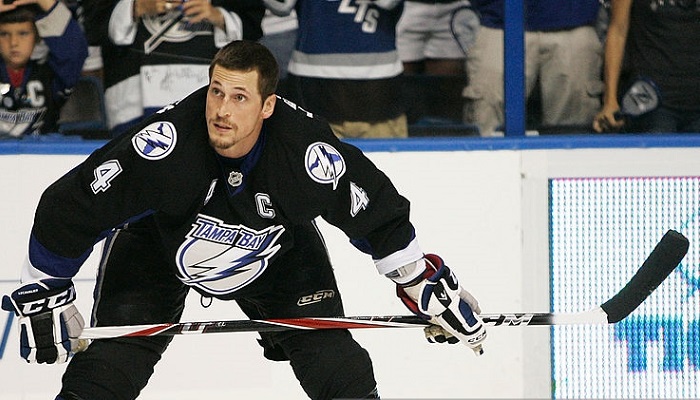
Shortly after recovering from the last lockout, Lightning fans had to cope with the buyout of longtime franchise face Vincent Lecavalier. (Photo by Justin K. Aller/Getty Images)
Some previous contracts could go up to 15 years, and rarely worked out positively for the teams. Now we are looking at a maximum seven- or eight-year deal between a player and the team that drafted him.
The change did make sense for fan bases and owners. It has created two runs on players in free agency. The first comes when they finish their entry-level contract, the second when that pact runs out.
Both the lowered cap ceiling and contract limitations for 2014-15 brought with it another difficult time for fans of certain teams. Due to these changes, many teams had players on old contracts that no longer fit into the new regulations.
While the teams could always keep these contracts, they were granted two compliance buyouts to delete those figures from the cap. But that window had closed by 2014.
This led to many franchises scrambling to dump contracts that would have been a burden for years to come. While that helped in the long term, it led to unceremonious breakups with franchise players, like Vincent Lecavalier in Tampa.
For fans who may not understand the salary cap, seeing a former household name go that way was a huge blow in the short term. To go from the lockout to losing a former star player was a lot to take in a short time.
It is amazing how much can change in five years, though. While things are running smoothly now, we are only five years away from another NHL CBA expiring.
In theory, this should not be an issue. Discussions should run smoothly and a new agreement should be hammered out long before the end of the current CBA.
This is the NHL, however. We all know what should happen never happens. Each time a CBA expires, it is a slow, painful process to draft a new one.
Come September 2022, we may experience the same lockout frustrations as we were back in 2012.
While there will be plenty of good hockey in the interim, the NHL cannot afford any repeats in the neighborhood of 1994, 2004 or 2012. Not only does delaying the start to a season put off casual and hardcore fans, it just leaves the NHL looking foolish.
So for now, we can all enjoy the start to a new season. As fans, all we can do is support this league and enjoy the product on the ice. Have fun with the new season (as well as the new team in Vegas) and prepare for the long haul for the rest of the year.
Just don’t forget how much can happen in five years. Here’s hoping those in control can remember the past to avoid the same outcomes in the future.
Leave a Reply